


Homeporting in the Middle East, sailing roundtrip 7-night itineraries from Dubai and Abu Dhabi, AIDAperla is one of the largest and most advanced cruise ships in the AIDA Cruises fleet.

A cruise ship should feel like a small city that forgot how to worry, and between the laughter echoing from AIDAperla’s Beach Club, the hiss of beer taps in the Brauhaus after midnight, and the quiet hum of the spa’s thermal loungers, that idea becomes a lived reality.
Delivered in 2017, the 125,500-ton AIDAperla is not merely a cruise ship in the conventional sense, she’s a floating resort designed with remarkable clarity of purpose for a specific audience: German-speaking families and multigenerational groups seeking an informal, social, activity-rich holiday at sea.
Everything about her design, programming, and onboard flow reflects this focus, from cabin layouts to dining strategy, from entertainment architecture to spa philosophy.

Onboard culture
The cultural identity of AIDAperla is immediately apparent. Roughly 95 percent of passengers are German-speaking, predominantly from Germany, Austria, and Switzerland, even during deployment in the Arabian Gulf. All signage, menus, entertainment, activities, shore excursions, and announcements are in German, with only essential safety and operational information repeated in English.
The crew operates bilingually, but the ship’s social rhythm, humour, and communal behaviour are unmistakably Germanic.
For passengers comfortable in that environment, the result is one of the most cohesive and relaxed atmospheres currently at sea. For those who are not, AIDAperla demands honest self-assessment before booking. This is not an internationalised product softened for global consumption; it is unapologetically European and specifically German in character.
The passenger mix skews heavily toward families, especially during school holidays and summer seasons. Multigenerational travel is common: grandparents, parents, and children moving as one unit across the ship. The prevailing mood is casual, cooperative, and cheerful. There is little emphasis on formality, status or hierarchy; the ship’s culture rewards participation rather than presentation.

The ship’s heart: Beach Club and Activity Core
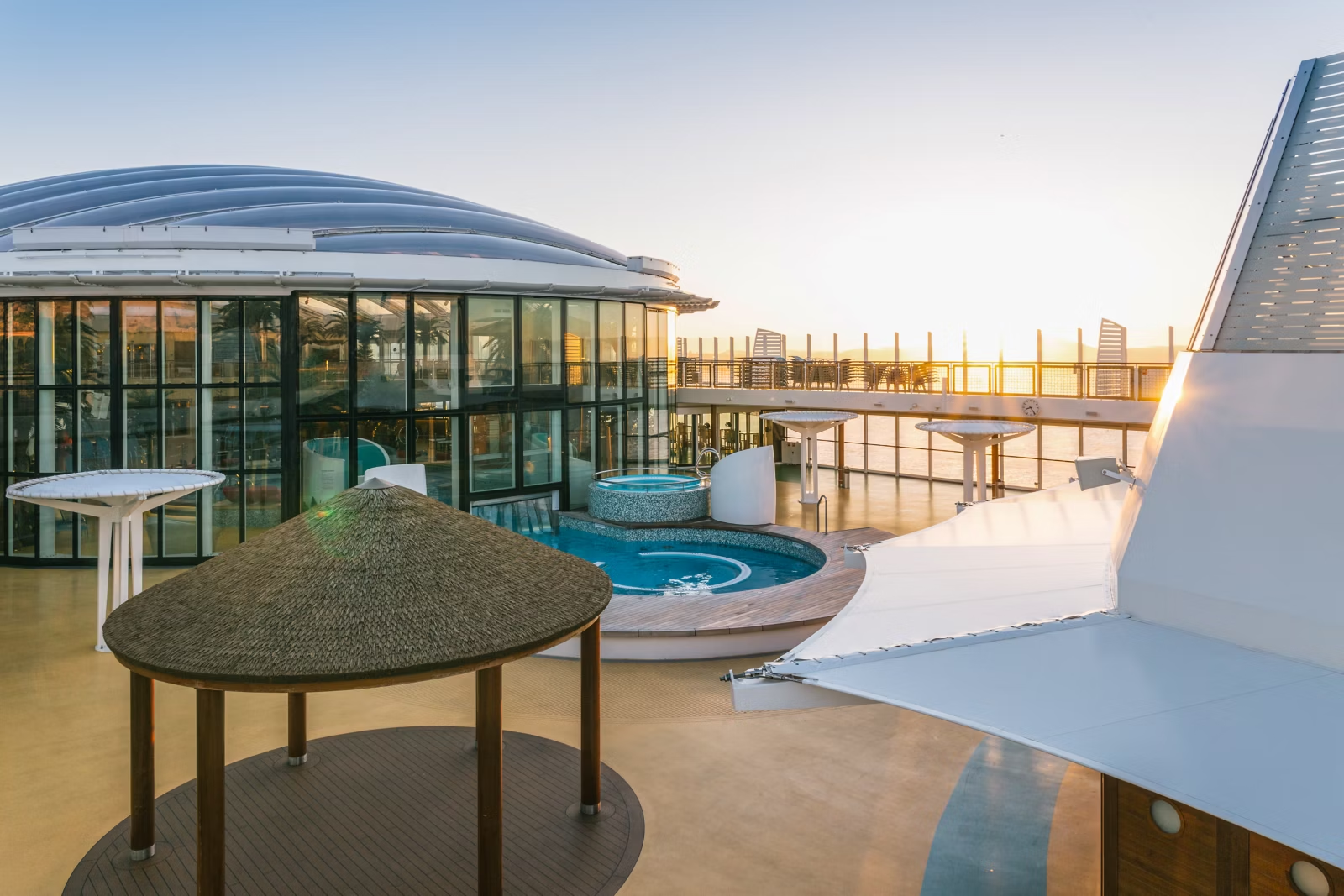
At the literal and social centre of AIDAperla sits the Beach Club, an immense indoor-outdoor pool complex capped by a retractable glass roof that admits daylight and UV warmth while allowing the entire space to transform with weather and time of day. It functions as the ship’s living room, playground, nightclub, and town square all at once.
Here families spend entire sea days drifting between loungers, pools, splash zones, bars, and snack counters. Children run circuits between waterslides, lazy river, and rope courses while parents alternate between supervision and surrender. At night the same space becomes an entertainment hub with DJs, live bands, and dancing.
Radiating from the Beach Club is a dense web of activity: mini-golf, Ping-Pong, sports courts, ropes courses, water play zones, and stadium seating where parents become spectators of their own children’s competitions. This spatial concentration of activity creates the ship’s defining energy, continuous movement, noise, laughter, and visual engagement, making the passenger compliment feel like a community rather than thousands of strangers at sea.


Accommodation designed for families
AIDAperla’s accommodation design reveals her core mission. Cabins range from 172-square-foot inside rooms to 1,238-square-foot suites, with a strong emphasis on multi-occupancy. Many cabins accommodate four or more guests, meaning that actual onboard population often exceeds the nominal double-occupancy figure of 3,286 passengers.
The cabins themselves are practical and spacious. All include two twin beds that convert into a European king, desks, showers, ample storage, and functional bathrooms. Balcony cabins feature full-size couches and AIDA’s distinctive hammock stretched across the balcony, an oddly simple feature that becomes one of the most beloved spaces onboard for reading, napping or watching the sea.
Amenities are deliberately minimal compared with North American cruise standards. There are no top sheets, no washcloths, no refrigerators, no vanity tables. Instead, there is room to move, room to store belongings, and layouts that support long stays by large families. The design choice is pragmatic rather than luxurious, and it works, because AIDA knows most of its passengers use the cabin only as a space to change, wash, and sleep.
Junior suites and above unlock additional privileges: spa discounts, exclusive dining experiences, priority check-in, and access to the AIDA Lounge, a calm retreat with concierge service, indoor and outdoor seating, complimentary snacks and drinks, and space to retreat from the ship’s constant activity. It is here that most of the ship’s childless couples can be found on any given sailing.


Dining that’s social by design
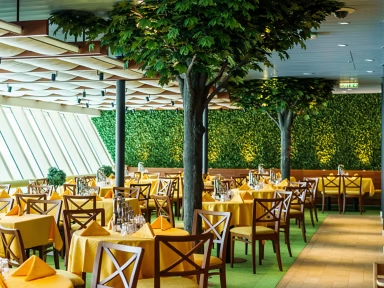
AIDAperla operates without a traditional main dining room. Instead, her culinary ecosystem revolves around 12 buffet, premium, and casual venues that prioritise flexibility, social flow, and volume.
There are five buffet restaurants (Markt, Bella Donna, Fuego, Weite Welt and East). Markt is the largest and most diverse, with extensive indoor and outdoor seating, while East brings Asian influences including Mongolian grill stations and pho counters, forming the backbone of daily dining operations.
Menus lean heavily toward German comfort food: roast meats, sausages, potatoes, pasta dishes, pickled fish, cured meats, cheeses, and generous dessert spreads. Wine, beer, and soft drinks are included at lunch and dinner in these venues, which shapes the dining atmosphere. Guests queue before opening and linger long after finishing, especially at dinner, turning meals into social events.
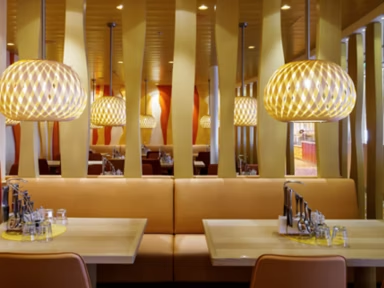

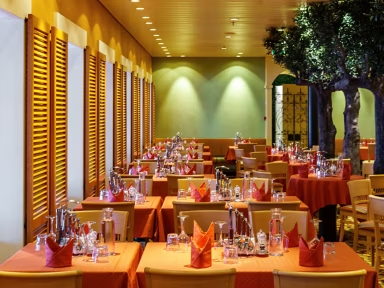


Three speciality restaurants (Rossini, Sushi and the Steakhouse by Tim Malzer) operate for an additional charge, offering quieter, more deliberate dining for those seeking a break from buffet energy. Rossini, the ship’s fine-dining option, focuses on farm-to-table cuisine and offers both à la carte dining and a six-course tasting menu.
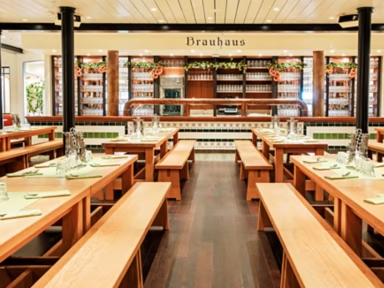
Three additional venues are free with the purchase of a drink: French Kiss (French cuisine), Tapas (Spanish small plates) and the Brauhaus, the ship’s most iconic social venue. The Brauhaus houses the onboard brewery, long bench seating, hearty German menus, and nightly entertainment. After dinner, it transforms into a loud, joyful gathering place with group singing and dancing, a kind of Oktoberfest at sea.
Scattered throughout the ship are snack venues: currywurst counters, ice-cream bars, and casual grab-and-go stations. The absence of a formal main dining room is not felt; instead, the ship’s dining model reinforces its communal, unstructured rhythm.
Bars, lounges, and nightlife
AIDAperla offers a wide range of 18 bars and lounges that evolve throughout the day. Daytime tends to be subdued, with evening hours bringing a steady escalation of music, crowds, and celebration.
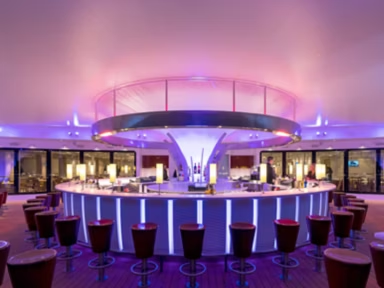

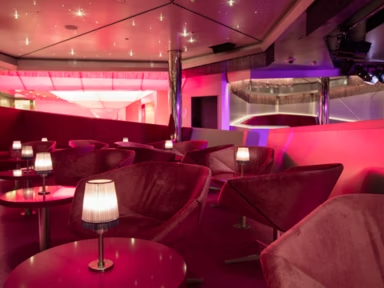
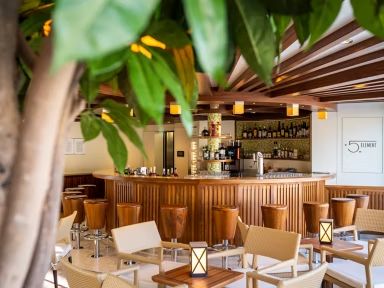
The Brauhaus anchors the nightlife. Nightfly nightclub offers ticketed shows and adult-only performances, while the Beach Club hosts DJ-driven parties that often run late into the night.
The ship includes a small casino and a selection of retail spaces offering designer goods and branded merchandise, though these remain secondary attractions compared with entertainment and activity.
Entertainment
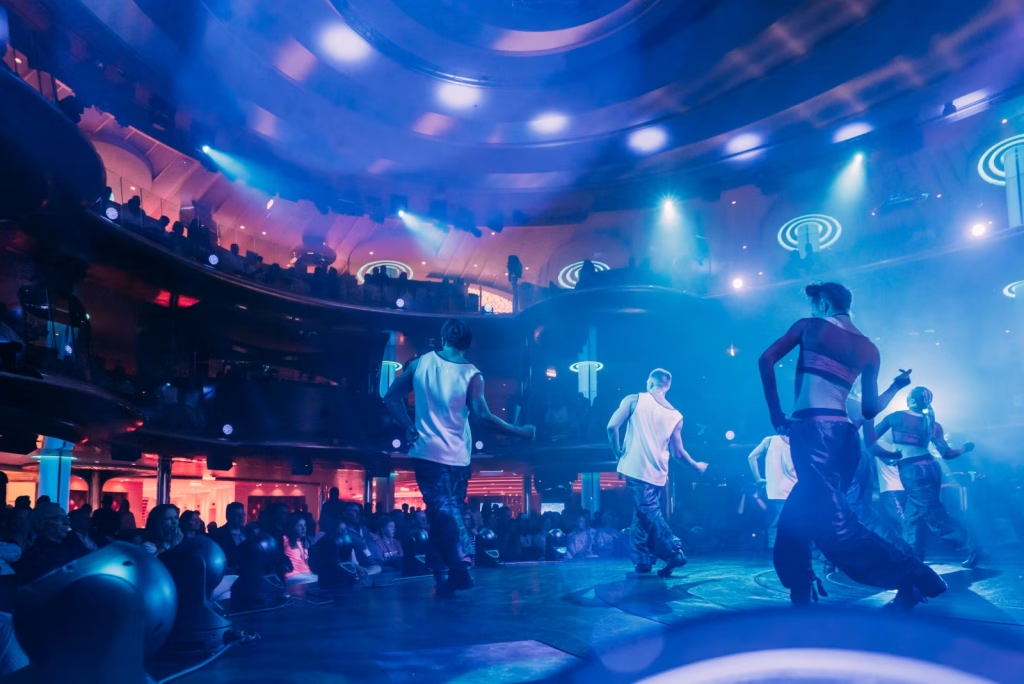
Perhaps the ship’s most innovative design feature is the Theatrium, a three-deck open performance space located at the physical centre of the vessel. Part theatre, part atrium, part town square, it has no walls and no fixed audience.
Performances unfold amid the natural flow of foot traffic, with guests drifting in and out, watching from balconies, booths, and adjacent corridors.

The stage is circular, seating is in the round, and programming runs continuously: live music, games, shows, workshops, contests, character appearances, and presentations.
This open-format design eliminates the popular cruise tradition of “going to a show” and replaces it with casual, constant engagement that feels less special, but remains good fun.

Wellness and fitness
The Body & Soul Spa is one of AIDAperla’s signature features. Its vast thermal suite includes saunas, steam rooms, water beds, ceramic loungers, sun beds, hot tubs, and relaxation areas. The sauna zone follows German tradition and is strictly natur (no clothing permitted) while the rest of the spa allows swimwear.
For those of a more conservative cultural norm, two private spa suites can be rented, each with private thermal facilities. Treatment rooms offer a full menu of massages, facials, and body therapies, while the adjacent salon handles hair and nail services.
The fitness centre is equally substantial, equipped with modern cardio and weight machines and supported by a continuous programme of classes including yoga, spinning and group fitness.
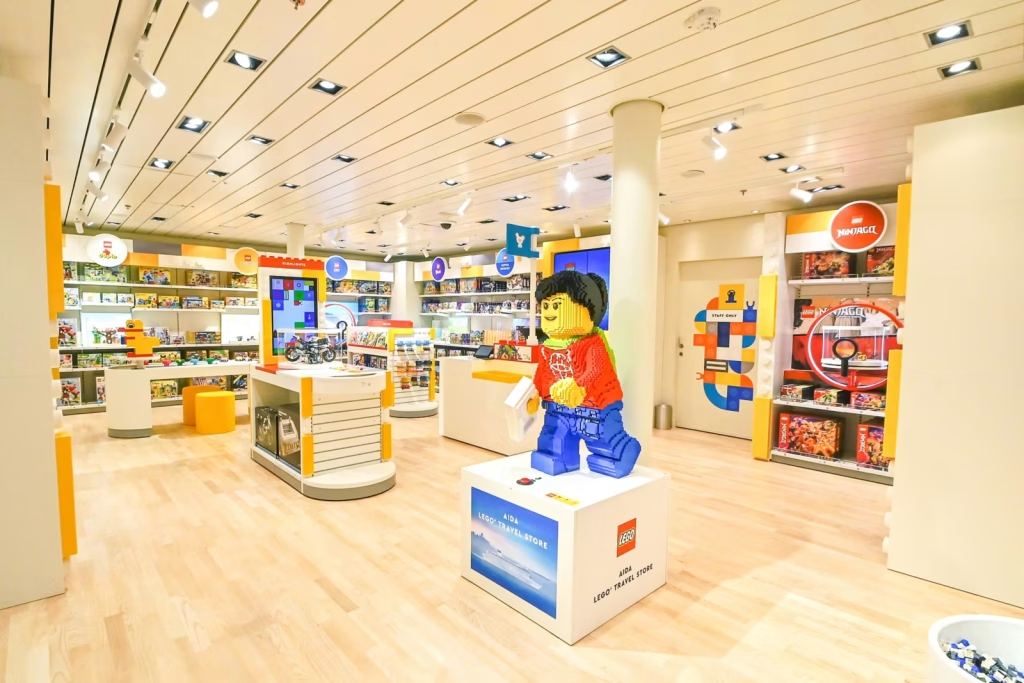
Children and family life
Every aspect of AIDAperla reinforces its identity as a family ship. Cabins accommodate large groups. Activities are designed for shared participation. Programming for children runs from early morning to late evening.
Kids’ clubs cater to ages 3–17 with workshops, games, cinema nights, crafting, fitness activities, and supervised care. Daytime family shows fill the Theatrium, often starring AIDA’s mascot Dodo, whose appearances reliably trigger enthusiastic responses from younger guests.
Childcare is available for children aged 3 to 17, allowing parents moments of respite while knowing their children are deeply engaged.
Families tend to move as cohesive units, often spending entire days together rather than fragmenting into adult-only and child-only experiences. The ship’s design encourages this togetherness without making it compulsory.


AIDAperla is an impressive technical achievement, a ship that understands its audience with unusual precision and has constructed an environment where large families, multiple generations, and thousands of strangers coexist with ease.
AIDAperla does not chase traditional luxury. Instead, she offers something rarer in modern cruising: emotional comfort at scale. Her success lies not in opulence, but in the quiet brilliance of allowing life, loud, joyful, messy, and ordinary, to unfold at sea exactly as it should.
Categories: Cruise Features, Cruise News, Reviews, Ship Reviews
